

If you spend most of your day sitting at a desk, there’s a good chance your body is trying to tell you something. Maybe it’s the stiff neck you feel by mid-afternoon, the aching lower back after a long meeting, or the tension headaches that seem to follow you home. These aren’t just signs of a rough day — they’re often warning signals that prolonged sitting and poor posture are quietly taking a toll on your spine. And here in McKees Rocks, PA, it’s one of the most common concerns Dr. Kevin Hartung hears from patients walking through the doors at Family Chiropractic Center.
The good news? Understanding what’s happening in your body is the first step toward fixing it. This article breaks down exactly how desk work affects your posture, your spine, and your overall health — and gives you practical, realistic steps to start feeling better.
What Is “Desk Posture” and Why Does It Matter?
What does poor desk posture actually mean? Poor desk posture refers to the habitual positioning of your body while seated that places excessive stress on the spine, muscles, and joints. It often develops gradually and without awareness — until pain or discomfort shows up to announce itself.
Most people don’t sit perfectly at their desks. That’s completely normal and human. But when poor posture becomes the default position for six, eight, or ten hours a day, the cumulative effect on your musculoskeletal system can be significant. Think of it less like a single injury and more like a slow, steady pressure being applied to structures that weren’t designed for it.
What Happens to Your Spine When You Sit All Day
Your spine has a natural, elegant S-shaped curve when viewed from the side. This design allows it to absorb shock, distribute weight evenly, and support your entire upper body. But prolonged sitting — especially with forward head posture or a rounded lower back — disrupts those natural curves in ways that can lead to real problems over time.
When you lean forward to look at a screen, your head shifts in front of your shoulders. For every inch your head moves forward, the effective load on your cervical spine (your neck) increases substantially. Your neck muscles, originally designed to support roughly 10 to 12 pounds, can feel the equivalent of much more when your head is consistently jutting forward. That sustained tension in the neck and upper back is a major driver of the stiffness, soreness, and headaches that desk workers experience.
Meanwhile, in your lower back, prolonged sitting flattens the natural lumbar curve. This places increased pressure on the discs between your vertebrae and can cause the surrounding muscles to weaken or tighten over time. The hip flexors — muscles that connect your lower spine to your thighs — shorten from being held in a contracted position for hours. When you finally stand up, those tight hip flexors can pull on your lower back, contributing to discomfort even when you’re not sitting anymore.
It’s a whole-body cascade, not just a localized issue. And it doesn’t happen overnight — which is exactly why so many desk workers don’t notice it until the problem has been building for months or years.
Common Causes of Poor Desk Posture
Understanding why poor posture develops helps you address it at the root. There are several factors that consistently contribute to desk-related posture problems, and most of them have nothing to do with laziness or carelessness.
Monitor height is one of the biggest culprits. When your screen sits too low — which is common for laptop users — you naturally tilt your head downward for hours at a time. This places constant flexion strain on the cervical spine. When the monitor is too far away, you compensate by leaning forward, which rounds the shoulders and upper back.
Chair setup matters just as much. A chair that doesn’t support the lower back’s natural curve encourages the pelvis to tilt backward, flattening the lumbar spine. If your feet don’t reach the floor comfortably, your hips are poorly positioned, which throws off the alignment of everything above them.
Stress and fatigue also play a role that often gets overlooked. When you’re mentally exhausted or tense, your muscles tend to tighten and your posture tends to collapse. The connection between mental state and physical tension is very real, and it’s one reason why demanding workdays seem to leave people physically drained as well.
Finally, lack of movement throughout the day compounds everything else. Even a reasonably good seated posture becomes problematic when it’s held without interruption for hours. The human body simply wasn’t designed to stay still that long.
Signs Your Desk Job Is Affecting Your Posture
Not everyone experiences desk posture problems the same way. Symptoms can range from mild and occasional to persistent and life-disrupting. Here are some of the most common indicators that your seated habits may be catching up with you.
Neck stiffness and upper back tension are often the first signs people notice. This may feel like a dull ache between the shoulder blades, a tight, rope-like feeling along the sides of the neck, or difficulty turning your head fully to one side. Many patients at Family Chiropractic Center in McKees Rocks describe this as a feeling of being “locked up” by the end of the workday.
Tension headaches that start at the base of the skull and radiate forward are another hallmark of poor desk posture. These are frequently related to tight suboccipital muscles at the back of the head being overworked from holding the head in a forward position.
Lower back pain, particularly the kind that feels worse after long periods of sitting and briefly improves when you stand or walk, is a classic desk-related complaint. Some people also notice a general feeling of fatigue or heaviness in the legs, which can result from reduced circulation and hip flexor tension built up during prolonged sitting.
In some cases, people experience tingling or numbness in the arms or hands. This can result from nerve irritation in the neck or thoracic outlet area stemming from poor posture and muscle imbalances. This kind of symptom deserves prompt professional attention.
How Chiropractic Care Fits Into the Picture
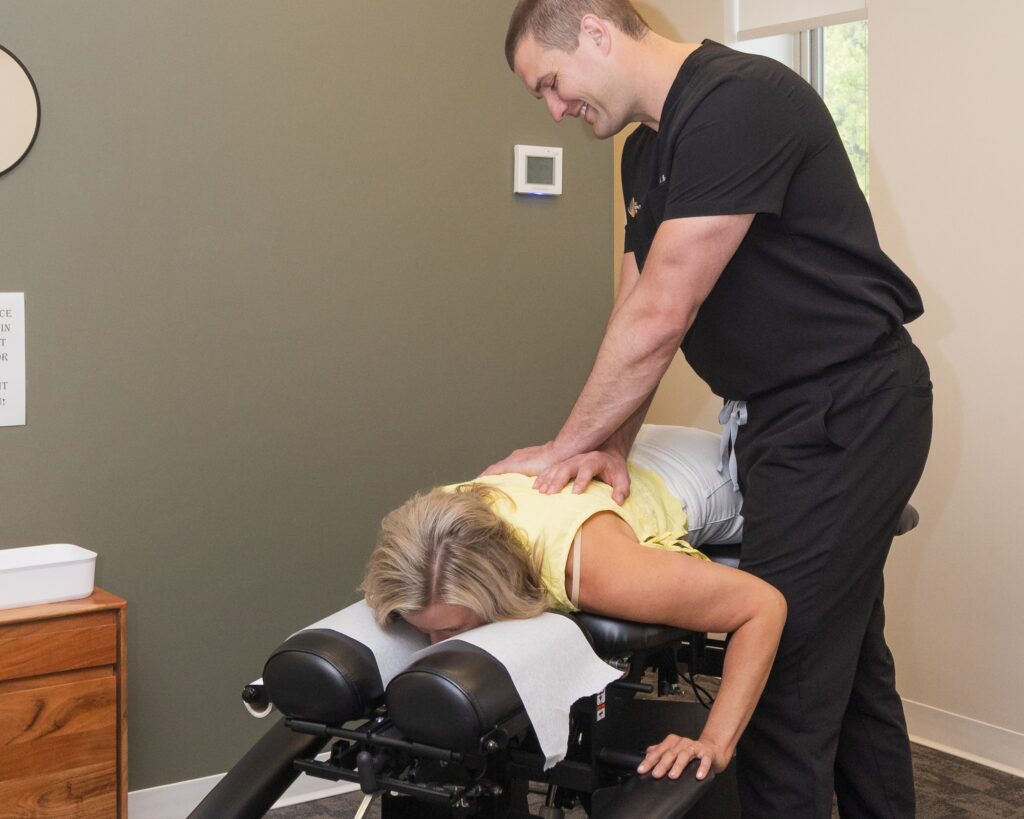
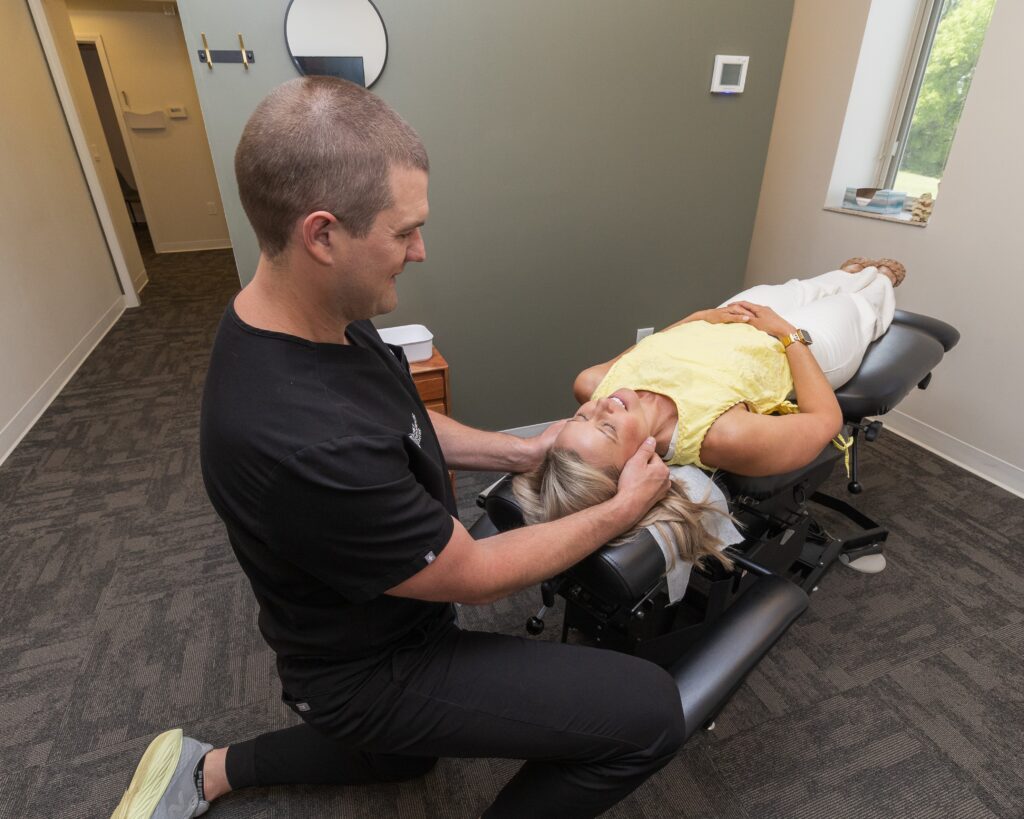
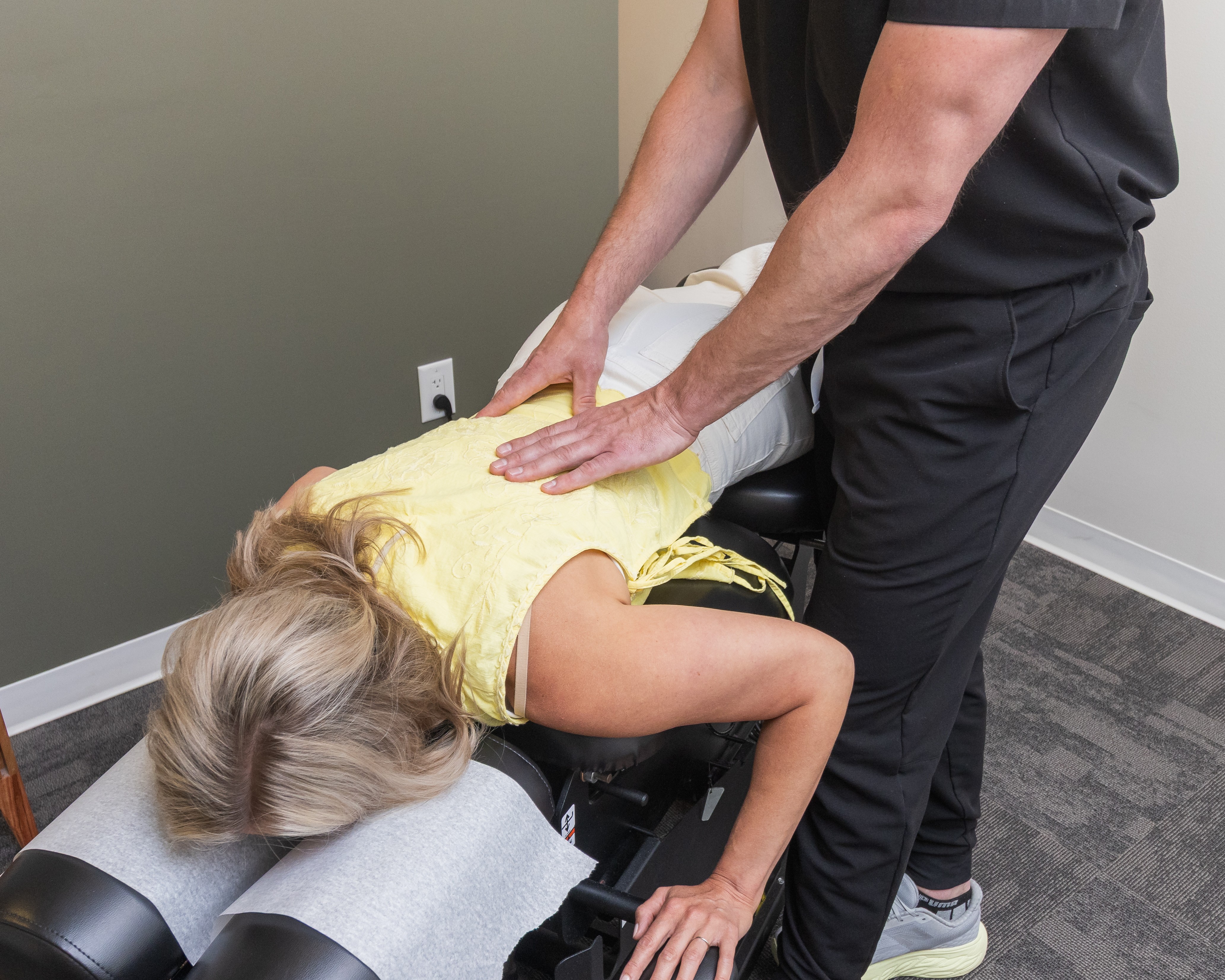
Chiropractic care offers a natural, non-invasive approach to addressing the musculoskeletal effects of prolonged desk work. At Family Chiropractic Center in McKees Rocks, PA, Dr. Kevin Hartung takes time to evaluate not just where a patient hurts, but how their entire spine and posture are functioning together.
Chiropractic adjustments are designed to restore proper joint motion and alignment in areas of the spine that have become restricted or misaligned — a condition chiropractors refer to as a subluxation. When spinal joints aren’t moving the way they should, surrounding muscles often compensate by tensing up, which creates the cycle of stiffness and discomfort so many desk workers know all too well. Restoring better movement to those joints can help interrupt that cycle.
Beyond adjustments, Dr. Kevin Hartung may also work with patients on soft tissue techniques, posture education, and specific stretches or exercises to address the muscular imbalances that desk work creates. It’s not just about treating pain in the moment — it’s about helping patients understand what their body needs to stay healthier in the long run.
Research suggests that spinal manipulation can be effective for musculoskeletal pain related to posture and mechanical causes. Organizations like the American College of Physicians have included spinal manipulative therapy among the recommended conservative care options for back pain. For desk workers experiencing recurring neck or back discomfort, this type of care can be a meaningful and practical part of their wellness routine.
Practical Tips to Protect Your Posture at Work
You don’t have to wait until you’re in pain to take action. Small, consistent changes to your work environment and daily habits can make a real difference in how your body feels over time.
Start with your monitor. The top of your screen should be at or just below eye level, and roughly an arm’s length away. If you’re working on a laptop, consider using an external keyboard and raising the laptop on a stand. This simple change can significantly reduce the forward head pull that accumulates throughout the day.
Check your chair setup. Your feet should rest flat on the floor (or on a footrest), your knees should be at roughly a 90-degree angle, and your lower back should be supported by the chair’s lumbar support — or a small rolled towel if your chair doesn’t have one. Your hips should sit slightly higher than your knees to encourage a natural lumbar curve.
Move regularly. Set a timer to stand, stretch, or take a short walk every 30 to 45 minutes. Even two or three minutes of movement can help reset muscle tension and improve circulation. A brief standing stretch for the hip flexors — stepping one foot forward and gently sinking the hips — is a good habit to build.
Be mindful of your shoulders. Many desk workers habitually hike their shoulders toward their ears, especially when stressed or focused. Periodically check in with yourself and consciously relax your shoulders down and back. Over time, this awareness becomes more automatic.
When to See a Chiropractor
There’s no hard rule about exactly when posture-related discomfort crosses the line from “manageable” to “time to get checked out.” But there are some helpful guidelines to consider.
If your neck or back pain has been present for more than a few days and isn’t improving with rest and basic stretching, it’s worth having a professional evaluation. Pain that’s getting progressively worse over time, or that consistently disrupts your sleep or daily activities, is another clear indicator that you shouldn’t just wait it out.
If you’re experiencing any tingling, numbness, or weakness in your arms, hands, legs, or feet, those symptoms warrant prompt attention. These can sometimes indicate nerve involvement that benefits from early intervention. Dr. Kevin Hartung at Family Chiropractic Center can help determine whether your symptoms are within the scope of chiropractic care or whether a referral to another healthcare provider is appropriate.
Red flags that require immediate medical attention — not chiropractic care — include severe pain following a trauma or fall, loss of bladder or bowel control, or significant weakness in a limb. These situations call for emergency evaluation.
|
Posture Mistake |
What It Causes |
Correction |
|---|---|---|
|
Forward head posture (screen too low) |
Neck strain, tension headaches, upper back tension |
Raise monitor to eye level; use an external keyboard with a laptop stand |
|
Rounded shoulders and upper back |
Mid-back stiffness, shoulder impingement, fatigue |
Sit back in chair; open chest; periodic shoulder rolls |
|
Flat lumbar spine (slouching) |
Lower back pain, disc pressure, hip tension |
Use lumbar support; keep hips slightly above knees |
|
Feet dangling or crossed |
Pelvic tilt, hip imbalance, sciatic irritation |
Feet flat on floor or footrest; avoid crossing legs for long periods |
|
Static posture without breaks |
Muscle fatigue, reduced circulation, joint stiffness |
Stand or move every 30-45 minutes; use a timer as a reminder |
Myths vs. Facts About Desk Posture
Myth: “Perfect posture means sitting completely still and upright all day.”
Fact: The “best” posture is actually a moving posture. Staying rigid in any single position — even a technically correct one — leads to muscle fatigue and joint stress. The goal is to vary your position frequently and avoid sustained static postures. Movement is more important than perfection.
Myth: “Back pain from desk work will go away on its own if I ignore it.”
Fact: While some mild discomfort can resolve with rest, recurring or persistent pain from postural strain rarely gets better without addressing the underlying cause. Waiting too long can allow muscle imbalances and spinal restrictions to become more entrenched, making them harder to correct later.
Myth: “Standing desks eliminate all posture problems.”
Fact: Standing desks can be a helpful tool, but standing all day has its own postural challenges. Prolonged standing without proper footwear or mat support can contribute to lower back and leg discomfort. The key is alternating between sitting and standing rather than swapping one static position for another.
Myth: “Chiropractic care is only for people with serious injuries.”
Fact: Many of the patients Dr. Kevin Hartung sees at Family Chiropractic Center aren’t dealing with acute injuries at all — they’re dealing with the accumulated effects of everyday habits like desk work and poor posture. Chiropractic care is well-suited to addressing these kinds of gradual, mechanical issues, and many people find it valuable as part of a proactive wellness approach.
Myth: “Once your posture is bad, there’s nothing you can do about it.”
Fact: The human body is remarkably adaptable. With the right combination of postural awareness, movement habits, targeted exercises, and professional support when needed, meaningful improvements in posture and comfort are genuinely achievable for most people — regardless of how long the problem has been present.
Final Thoughts From Family Chiropractic Center in McKees Rocks
Here in McKees Rocks, PA, a lot of hard-working people spend long hours at desks — and many of them are quietly carrying the physical consequences of that reality. At Family Chiropractic Center, Dr. Kevin Hartung’s goal is to help the local community understand that the aches and stiffness many people accept as “normal” aren’t necessarily something you just have to live with.
Your posture affects far more than how you look. It influences how your nervous system functions, how your muscles perform, and how much energy you have at the end of the day. Taking it seriously isn’t vanity — it’s smart self-care. And the steps involved don’t have to be overwhelming. Small, consistent changes in your work setup, combined with regular movement and professional support when needed, can create a meaningful shift in how you feel day to day.
If you’ve been noticing the signs that your desk job is catching up with you, the team at Family Chiropractic Center in McKees Rocks, PA is here to help. A conversation with Dr. Kevin Hartung is a great place to start.
Frequently Asked Questions
How long does it take to correct posture problems caused by desk work?
This varies considerably depending on how long the habits have been in place, the individual’s overall health, and how consistently they apply corrective strategies. Some people notice improvements in comfort within a few weeks of making changes, while structural postural corrections often take longer. A chiropractic evaluation can help set realistic expectations for your specific situation.
Can chiropractic adjustments help with tension headaches from desk work?
Research suggests that spinal manipulation, particularly in the cervical region, may help reduce the frequency and intensity of tension-type headaches. Many patients at Family Chiropractic Center report improvement in headache patterns as their neck function and posture improve. It’s worth discussing your specific headache pattern with Dr. Kevin Hartung to determine the most appropriate approach.
Is it normal to feel sore after a chiropractic adjustment?
Some mild soreness after an adjustment is not uncommon, particularly after the first few visits. It’s similar to the feeling you might have after beginning a new exercise routine — your body is adapting to new movement and alignment. This typically resolves within a day or two.
How often should I stand up from my desk during the workday?
Most guidance in the field of occupational health suggests standing or moving briefly every 30 to 45 minutes. Even two to three minutes of movement can help reset muscle tension and improve circulation. A simple timer on your phone or computer is an easy way to build this habit.
Can poor posture affect more than just my back and neck?
Yes — poor posture can have ripple effects throughout the body. It can affect breathing mechanics by compressing the chest cavity, contribute to digestive discomfort when the torso is chronically compressed, and influence mood and energy levels. The spine houses and protects the spinal cord, which means spinal health has a broader relationship with overall wellness than many people realize.
Do I need to have pain to benefit from seeing a chiropractor about my posture?
Not at all. Many people visit Family Chiropractic Center in McKees Rocks for posture evaluations and preventive care before significant pain develops. Identifying and addressing spinal restrictions and imbalances early can help prevent more serious problems from developing over time.
TL;DR Summary
-
Prolonged desk work disrupts the spine’s natural curves, tightens key muscle groups, and contributes to neck pain, back pain, and headaches that build gradually over time.
-
Poor monitor height, improper chair setup, chronic stress, and lack of movement are among the most common drivers of desk-related posture problems.
-
Simple ergonomic adjustments — like raising your monitor, supporting your lumbar curve, and moving every 30 to 45 minutes — can make a meaningful difference in how your body feels.
-
Chiropractic care can help restore proper spinal movement, address muscle imbalances, and provide posture education as part of a conservative, non-invasive wellness approach.
-
If desk-related discomfort has been lingering or getting worse, a professional evaluation with Dr. Kevin Hartung at Family Chiropractic Center in McKees Rocks, PA is a smart, practical next step.